Kris Sabbi
  • Home
  • Research
  • Outreach
  • A Field Blog

adventures in primatology

A few questions about play...

8/1/2017

 
Picture

Question: Are certain families more playful than others? If so, do you think that it results more from genetics or rearing and influence of the mother and older siblings?

Great follow up! But oh man, that's a LOT to unpack (in the good way).

My dissertation project investigates the development of sex differences in chimpanzee social strategies with a focus on play to track those diverging strategies. One of the questions that my data will address is whether males are generally are more playful than females, and if so, how early in development does that difference emerge (see footnote 1 for more on sex differences)? We have some good evidence from other sites (like Gombe, Lonsdorf et al. 2014A, Lonsdorf et al. 2014B) that sex differences in the amount of time spent playing and increased number of social partners among males do emerge early in development. That said, yes, some families do seem (and certainly are actually) more playful than others. 

While I haven’t dived directly into “family effects” yet, it seems to me that bigger families with more siblings are more playful. Of course, this might be entirely explained by the fact that having more siblings around means having more play partners around. Additionally, based on those prior findings about young male sociality, It can also be affected by whether or not those family groups are made up of more male versus female siblings. Honestly, I do think that availability has a lot to do with it: as long as there’s someone around to play with, its most likely going to happen. 
Picture
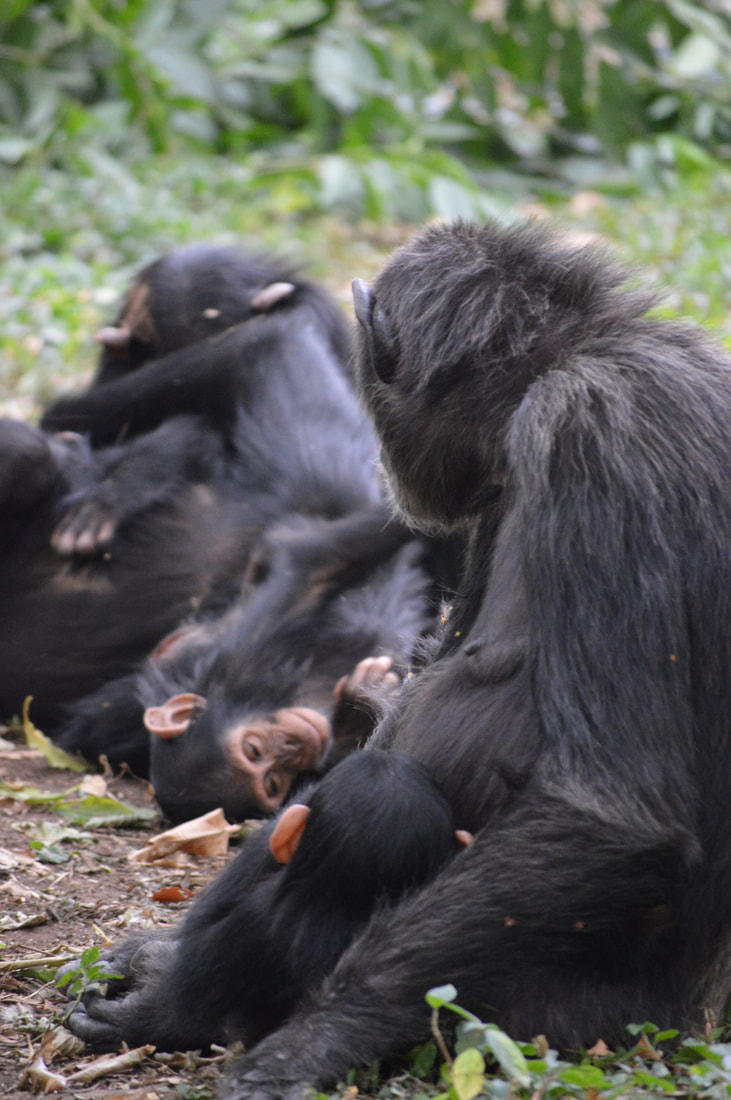
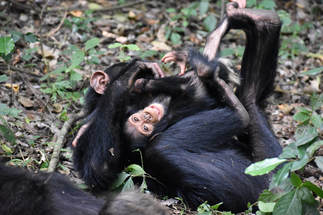
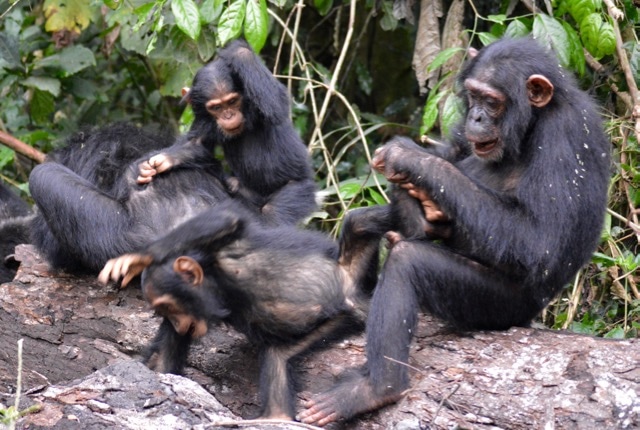
Have babies, will play!
Picture
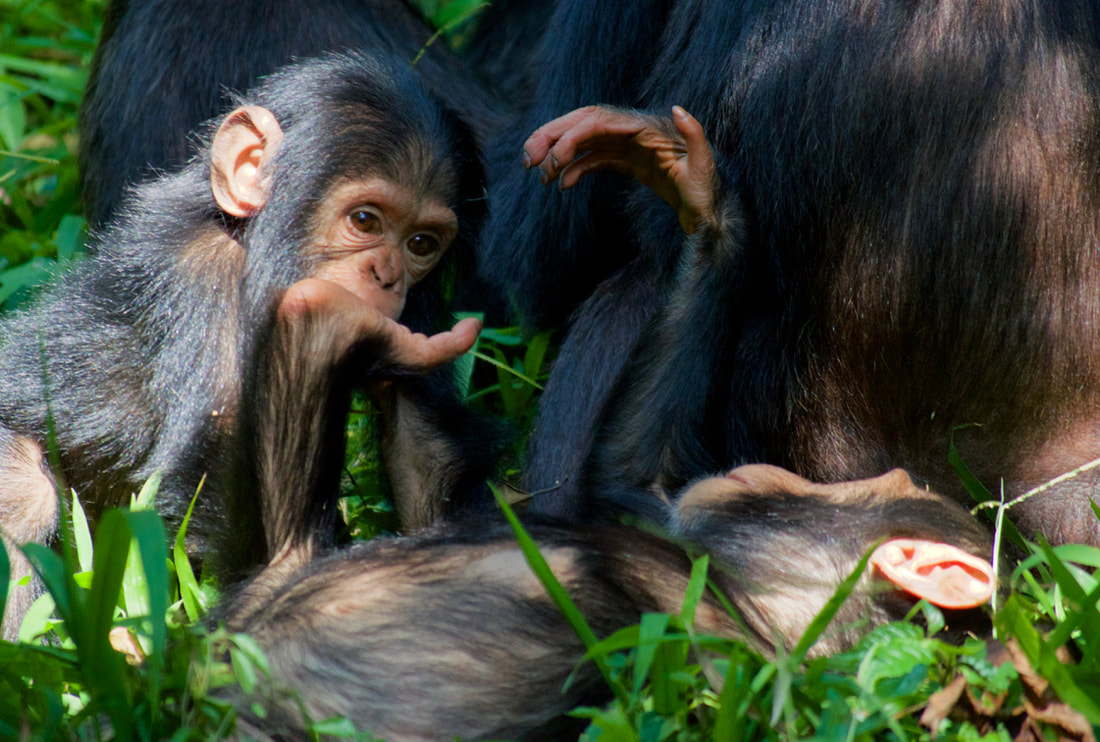
Lia also has a long line of kids that play with each other pretty constantly... I feel like together, the impression you really get from this post is that all the infants do is bite feet...

​In my study, since our primary interest focuses on sex differences, we need to quantify maternal and paternal effects in oder to control for them. In other words, we want to make sure that any sex differences we find are really caused by sex and not a consequence of have one mom that has all female offspring, and another has all males and really each family is just more like their mom. However, we should be able to use my dataset to address general maternal experience effects versus “just” genetics contributed by fathers. If those models show that either paternal or maternal identity has a large effect on differences in male and female social behavior, then of course I plan to dive right in and tease them apart! 
Picture
Picture
Outamba's family is particularly large, particularly playful, and almost entirely female- which is a great example of why we have to be really careful to control for maternal identity in our statistical approaches
First of all, I just want to say that I really love answering readers' questions and talking about the parts of chimpanzee behavior that other people are interested in too! So please, please, PLEASE, keep them coming! I can promise you that, even if it takes me a bit of time, I will get back to you and answer your questions as well and as thoroughly as possible. Every time :) 
Picture

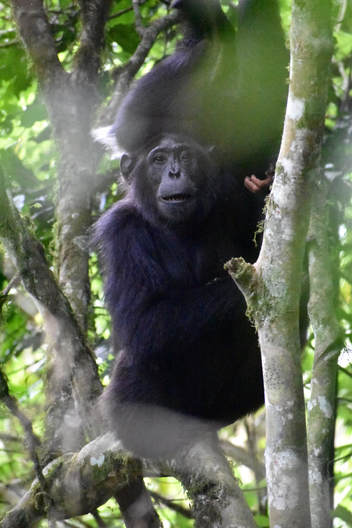
Question: Do you think playful adults like Tenkere were playful infants, like Tembo, and that Tembo will continue on as a playful adult? 

To answer your question: yes, in general, I do think that more playful mom’s raise more playful offspring. But it’s a complex problem! I’m going to try to answer you as completely as I can while also trying to keep it brief and not bore people.  ​
Picture
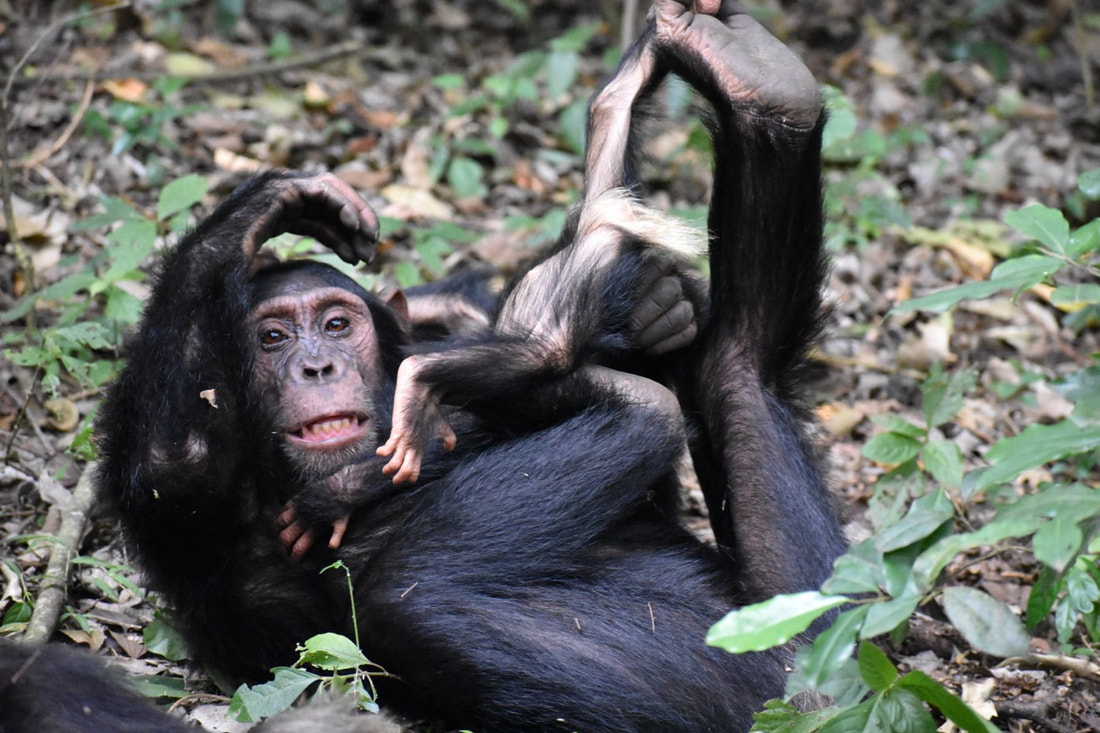
Mom's also have different play styles. It might not look like it but Tongo is playing with Tangawizi just by wiggling her toes for him to grab and bite at.

​The amount of time that chimpanzees spend playing either on their own or socially, declines quite a lot with age. This is pretty typical across mammals, and especially primates: infants and juveniles play a lot, then, as they reach reproductive maturity, play becomes much less frequent and by adulthood, playing is quite rare. However, my suspicion is that, “playfulness” as a sort of personality trait remains relatively stable throughout life.
Picture
Here, Wangari show us her passive hand play style with Winza.
Additionally, to fully consider playfulness, we have to think about energy availability too. We know that, in general, sociality is limited or constrained by food (aka energy) availability and play is one of the most energetically expensive types of social behavior. However, when food availability starts to decline, playfulness might change quite a lot both between and within individuals. Even among those certain individuals are very playful when food is ample, some individuals might be reduce play more or less than others if there isn’t as much calorie-dense food around. For those reasons, it’s very important to consider relative playfulness in two ways: first, how playful is one individual is compared to others in the same group at the same time after controlling food availability? Second, for each playful individual, how does playfulness change across time and during times of plentiful versus scarce food availability?

The most accurate way for me to word my answer to your question it that I predict, after controlling for typical declines in play with age and current energy availability, that relatively more playful chimps remain relatively more playful. ​ But stay tuned because I will have a more concrete answer coming right up as soon as I can get through these videos!

Footnotes:​
1In chimpanzees, adult males are generally considered to be more social than females (for details, check out the references at the bottom of this footnote), however, we don’t know if this sex difference is present from birth or emerges at some point during development. As play is the most common social interaction among young chimpanzees, that is one type of behavior that we can focus on to examine sex differences. As I analyze my dissertation data I’ll be trying to answer questions like: are males more playful than females? Do they initiate play more often? Spend more time playing? If so, how early does this sex difference emerge and how do general patterns of playfulness change with age? Do males and females play differently? Do they use different play styles? Focus on different partners? Do they use different play styles in response to the partners that they choose? 

(1) Goodall, J. (1986). The chimpanzees of Gombe: Patterns of behavior. 
(2) Wrangham, R. W. (1980). An ecological model of female-bonded primate groups. Behaviour, 75(3), 262-300.
(3) Wrangham, Richard W. "Why are male chimpanzees more gregarious than mothers? A scramble competition hypothesis." Primate males: causes and consequences of variation in group composition. Cambridge University Press, Cambridge (2000): 248-258.
(4) Otali, E., & Gilchrist, J. S. (2006). Why chimpanzee (Pan troglodytes schweinfurthii) mothers are less gregarious than nonmothers and males: the infant safety hypothesis. Behavioral Ecology and Sociobiology, 59(4), 561-570.
(5) Lehmann, J., & Boesch, C. (2009). Sociality of the dispersing sex: the nature of social bonds in West African female chimpanzees, Pan troglodytes. Animal Behaviour, 77(2), 377-387.
Readers' Questions Take One

3/6/2017

 
Picture

Before we get started…

Gender is a human cultural construct that ties up a lot of baggage linked to cultural definitions of the way that men and women should behave, rules about how they should interact among themselves and with each other, etc. However, we have no evidence that chimpanzees from differing communities exhibit culturally-based gender-roles. We also have no evidence that behavioral sex differences among chimpanzees are actively reinforced or shaped by other community members. For these reasons, we leave gender out of the chimpanzee conversation. Instead of using those loaded terms, we refer to males and females and discuss sex instead of gender. This is why I have edited the original wording of some of the questions. :)
Picture
Young Tambara pant-grunting at all the things...
​Full disclosure: I do not study vocal communication specifically, nor do I study vocal development. Infants seem to express a pretty full vocal range at an early age. Within a few months they can make all of the typical chimp sounds: grunts and barks and hoots, etc. but, from what I’ve seen, they don’t consistently apply them appropriately for at least a year.

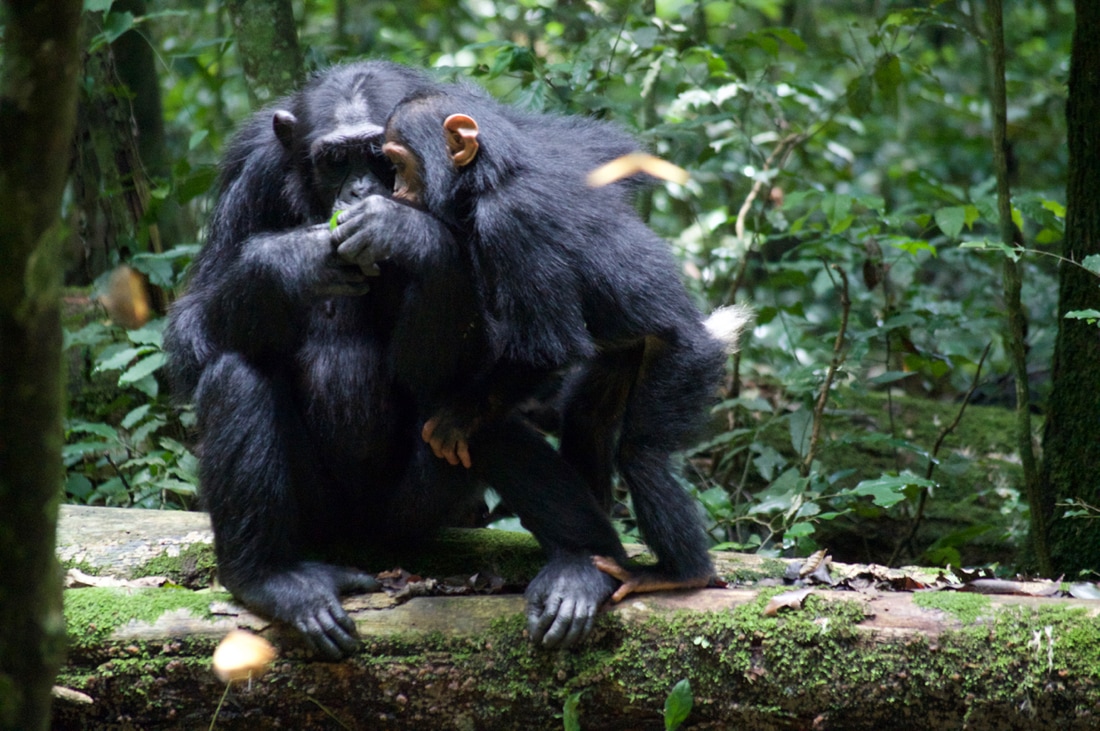
For instance, consider pant-grunts: Pant-grunts are a submissive vocalization that subordinate chimps make when approaching or being approached by dominant individuals. Thus the appropriate context for pant-grunting would be when chimps of unequal rank come into close proximity. Very young chimps begin pant-grunting after a few weeks. At first, they seem to sort of mirror their mothers, pant-grunting whenever mom does. But then, after a few months, infant pant-grunts seem to disarticulate from this association and infants begin to pant grunt at everything that moves within 10m of them whether their mother is grunting or not. After a year to 18 months, infants have a much better handle on their communication skills and generally are able to restrict their pant-grunting to appropriate contexts. By Leakey’s age (about 3 years old) they’ve got things nailed down. 
Picture
In their first few weeks (above), infants seem to pant-grunt indiscriminately...
Picture
...with time, they get much better, reserving pant-grunts for the appropriate moments.

​What kinds of vocalizations do Lobo and Leakey make at these ages?
Picture

​Do they communicate directly with one another much, or is it generally directed at their mother?

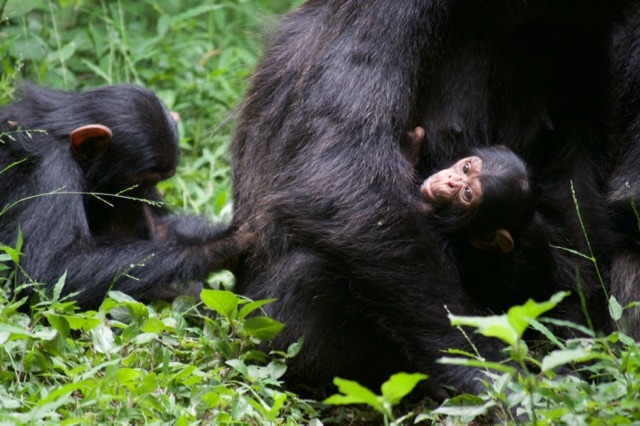
Both infants communicate directly with their mom more often than they communicate with other group members, but I don’t think that I’ve ever noticed either baby using their mother as a conduit for communication with their sibling. 

Like other mothers, sometimes Lia will interrupt another individual’s attempt to make direct contact with Lobo. For instance if Leakey wishes to play with Lobo but Lia doesn’t want her to Lia might physically prevent Leakey from touching Lobo or make a vocalization that interrupts Leakey’s advances. That said, for the most part, in my experience chimps communicate directly to each other rather than through third parties. 

Picture
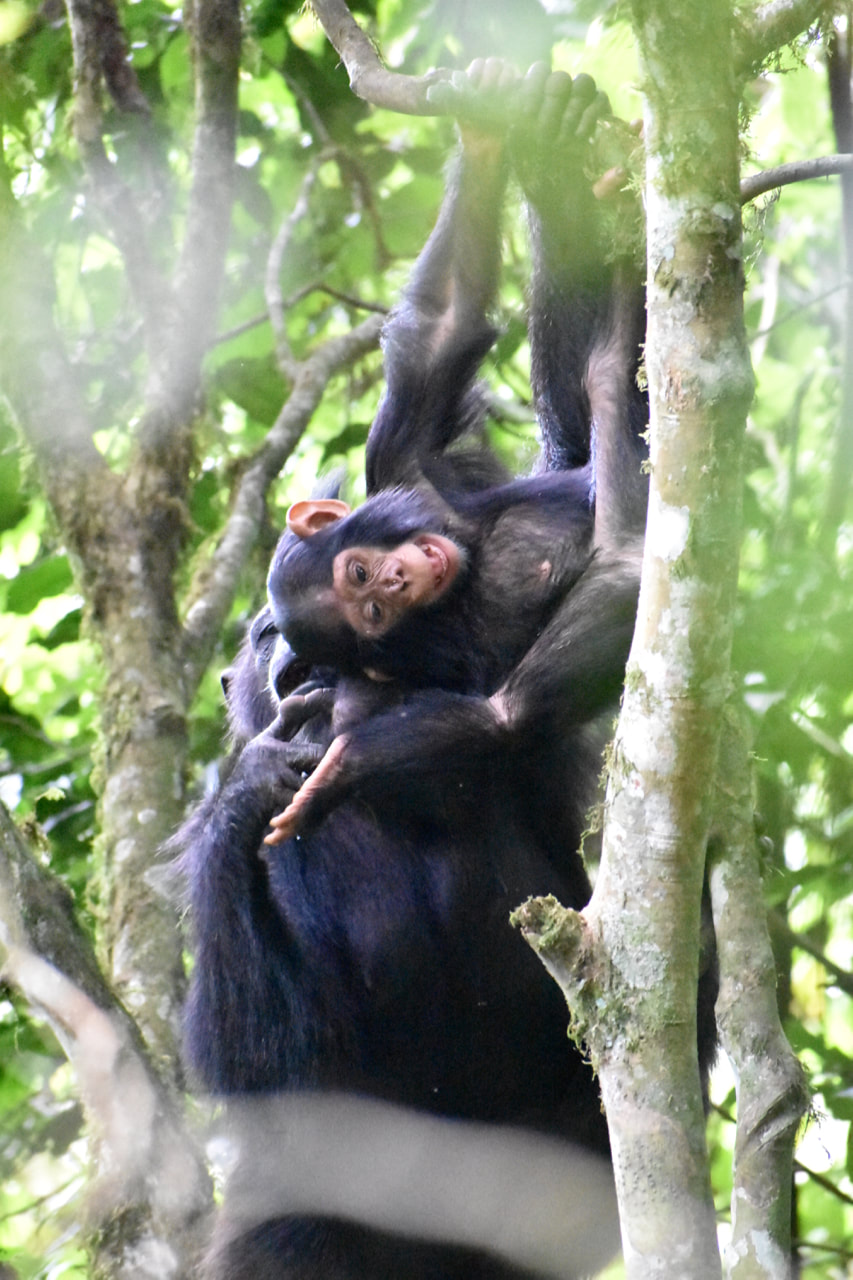
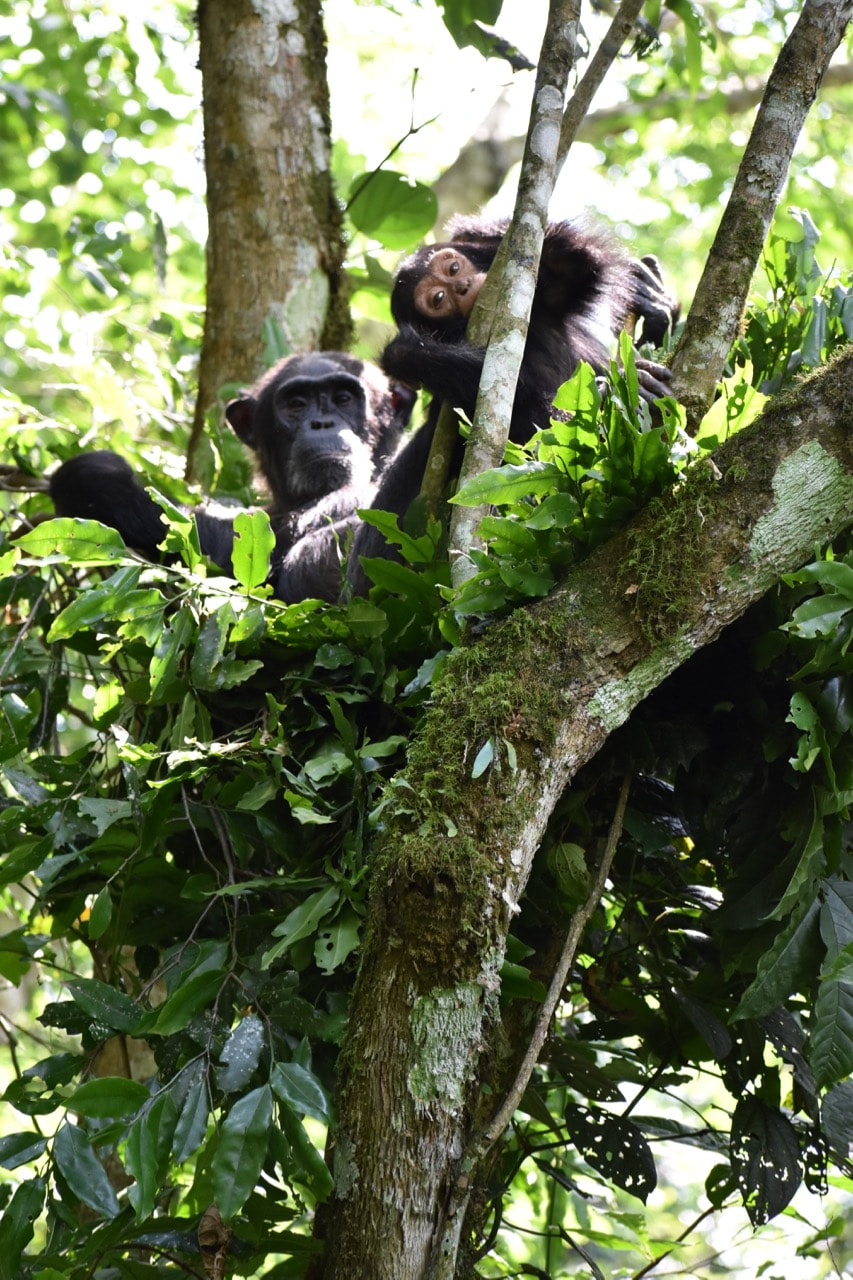
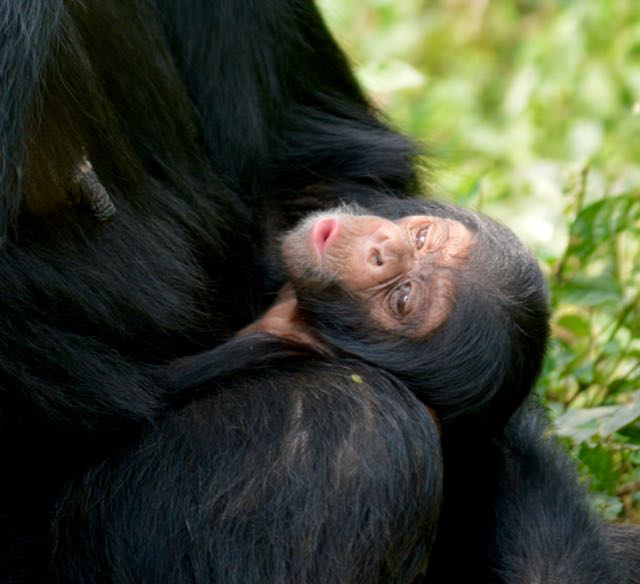
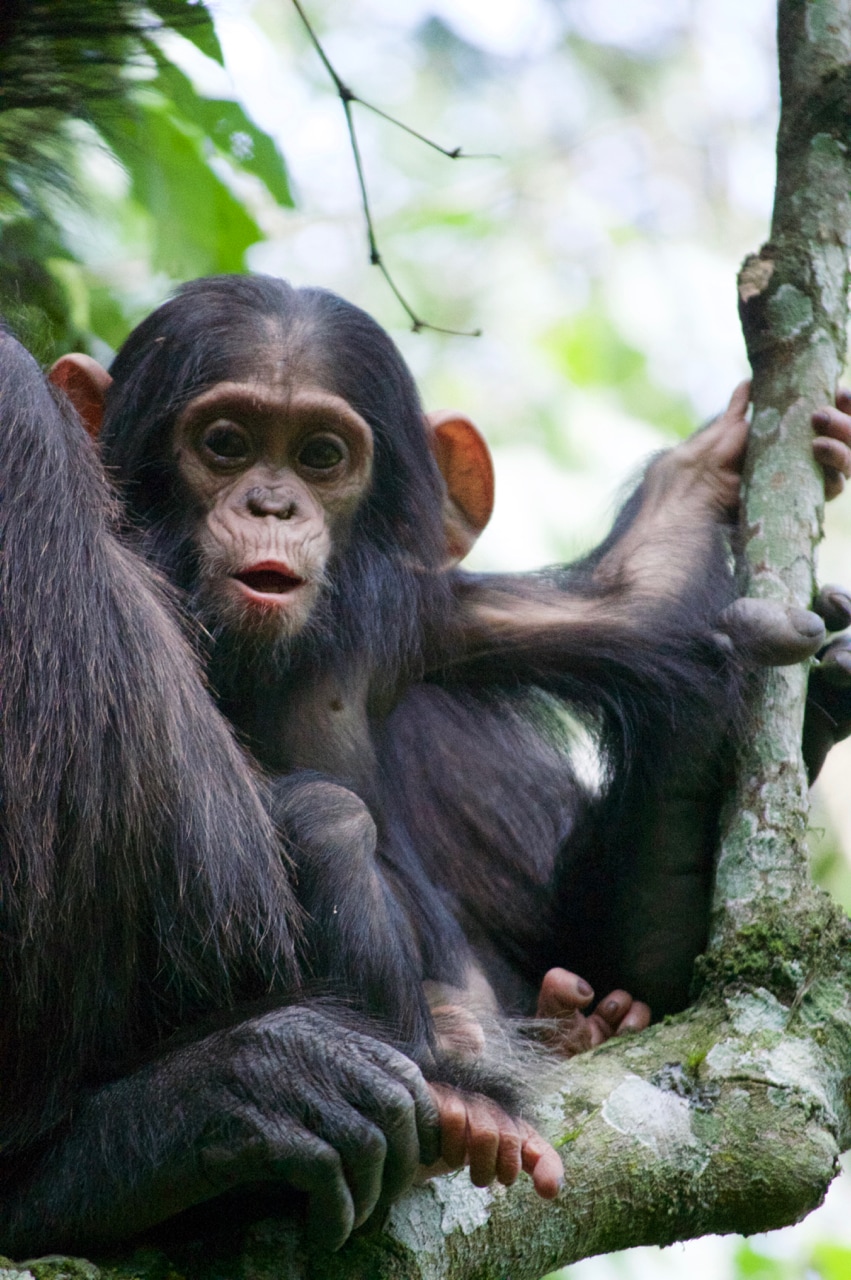
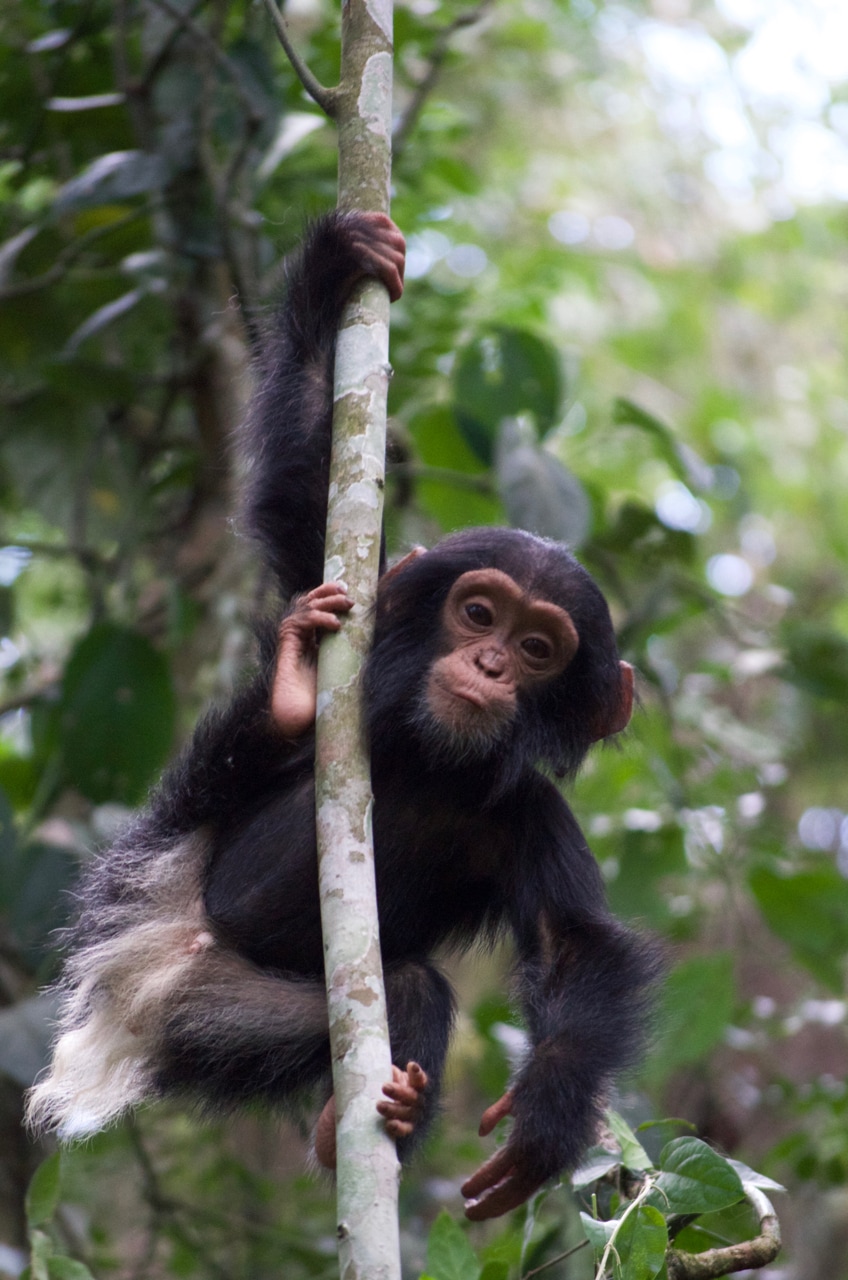
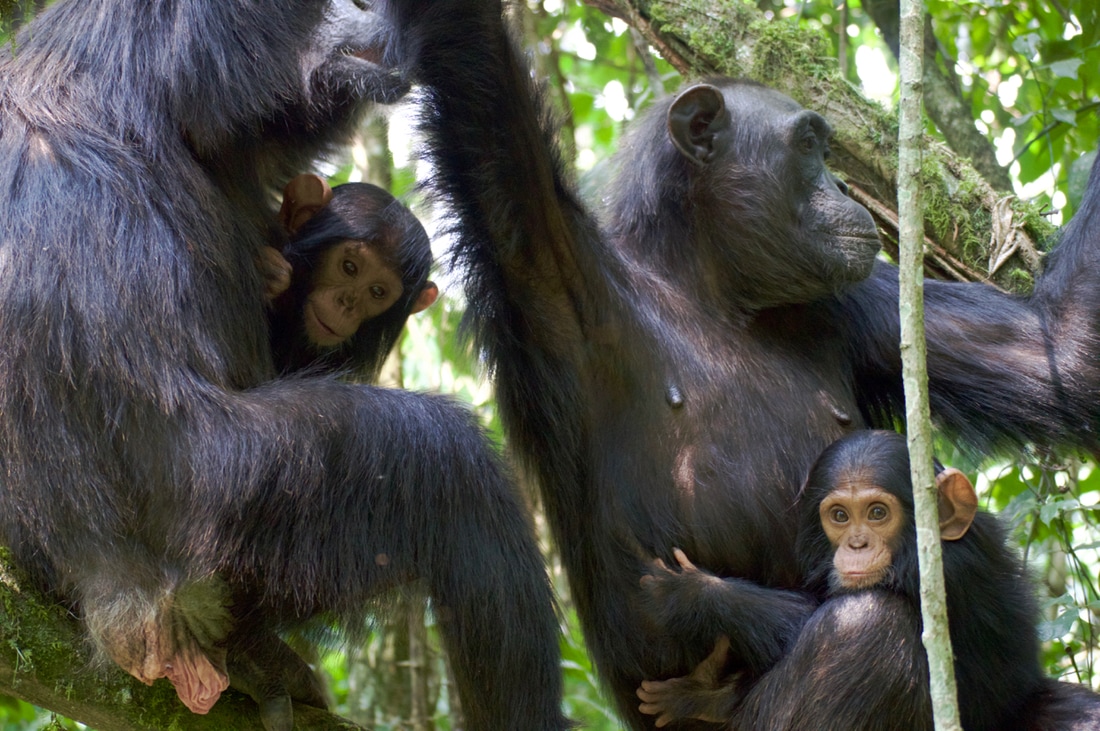
Chimpanzee infants are difficult to sex just by looking at their faces. Can you tell whether these two are male or female?

​When do you think mothers become aware of their infant’s sex?

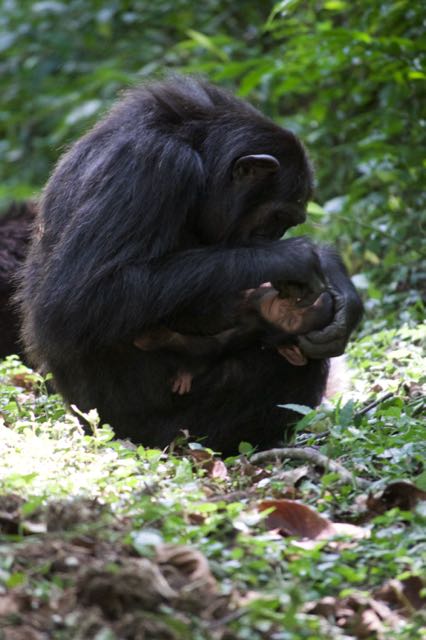
Pretty immediately. From day one moms spend a lot of time grooming and inspecting every inch of their infants (see below). And despite that there aren't obvious differences in the pelage or facial structure of male and female infants, It isn’t too difficult to determine sex in them. Even though males aren’t born with very conspicuous testes, their penises are pink against their black hair and are easy to see (see below). We can even sex infants in the first few days as long as we can get the right angle on things.
Picture
Mother chimpanzees groom and inspect every inch of their infants
Picture
With the right angle, its pretty easy to tell Tangawizi is male

Have you found that mothers respond differently to their infants depending on infant sex?

Great question. Let me analyze all this data and get back to you ;)

There isn't too much evidence (at the moment) that mamma chimps treat sons differently than they treat daughters, but it can be a hard thing to study, especially in chimps with long inter-birth-intervals. At Kanyawara, there were no cross-sectional differences in the ways that mothers ranged with male versus female infants (Otali et al. 2006). However, There is a paper from the research team at Gombe have reported that individual mothers range differently when they have infant sons versus infant daughters (Murray et al 2014). One of my hopes for this dissertation is to use my data to reexamine ranging patterns and determine if ranging over the last four years is consistent with either or both of these ideas. 
Picture
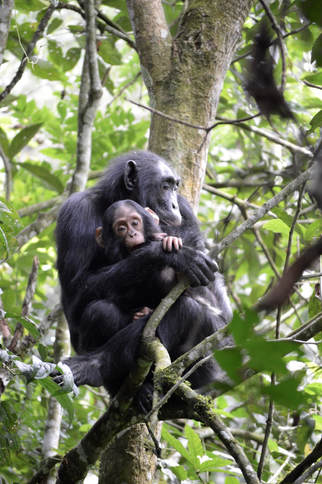
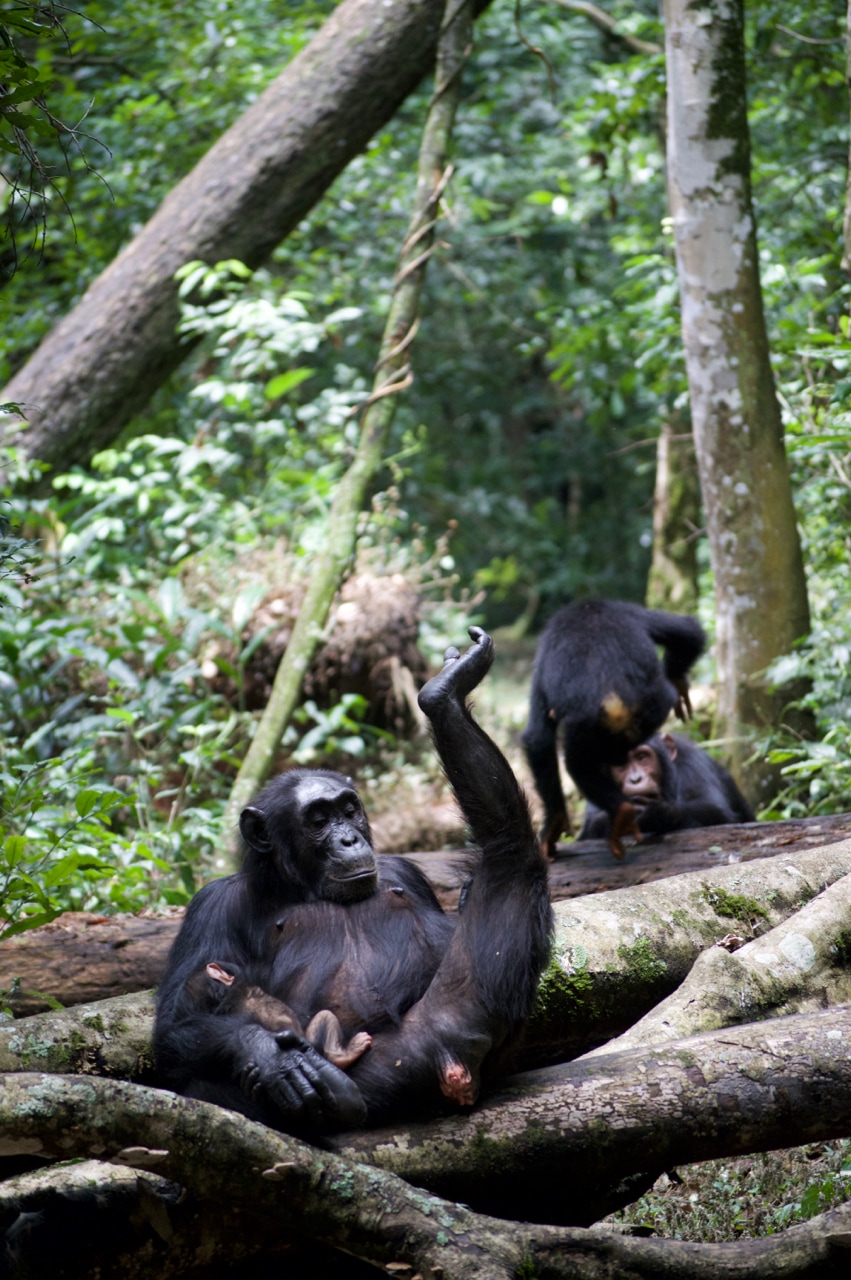
One of my favorite shots from the past few months: Wangari relaxing with her sleeping babe while her older two play in the background. What could be better?

    Kris Sabbi

    This blog is a forum share my personal experiences as a field researcher and traveler.
    These words are my own and do not reflect the views of any of my affiliates or any granting agency. 

    Categories

    All
    Current Science
    Field Feelings
    Manifesto
    Naledi
    Op-Ed
    Paleoanthropology
    Photo Ops
    Portraits
    Reader's Questions
    Silly Chimp Pics
    Story

    Tweets by @KrisSabbi

    Blog Archives

    June 2022
    March 2022
    September 2018
    July 2018
    June 2018
    January 2018
    December 2017
    September 2017
    August 2017
    June 2017
    May 2017
    March 2017
    January 2017
    December 2016
    November 2016
    July 2016
    June 2016
    May 2016
    March 2016
    February 2016
    January 2016
    October 2015
    September 2015
    August 2015
    July 2015
    June 2015
    May 2015
    April 2015
    March 2015
    February 2015


    By Category

    All
    Current Science
    Field Feelings
    Manifesto
    Naledi
    Op-Ed
    Paleoanthropology
    Photo Ops
    Portraits
    Reader's Questions
    Silly Chimp Pics
    Story

    RSS Feed

Powered by Create your own unique website with customizable templates.
  • Home
  • Research
  • Outreach
  • A Field Blog