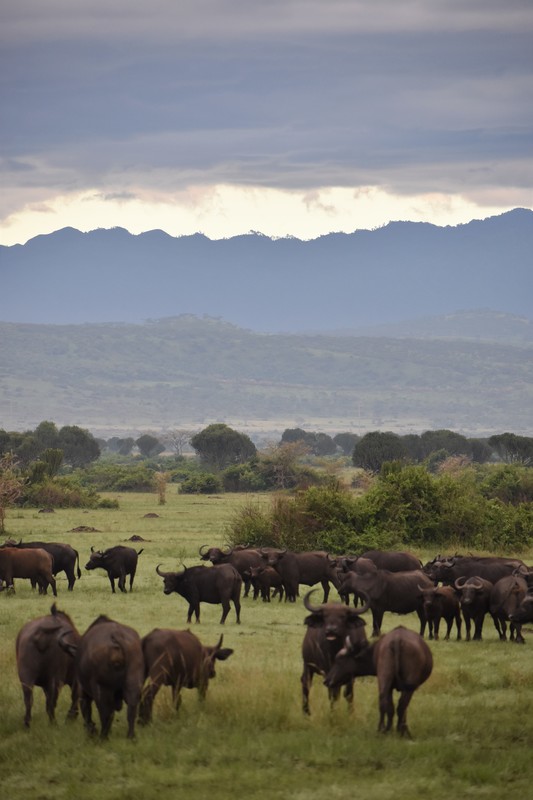
 Once upon a time, a forest-loving field researcher and her partner went to the great savanna at Queen Elizabeth National Park. Though less green than her normal environs the savanna was beautiful and full of wildlife! This is what they found….
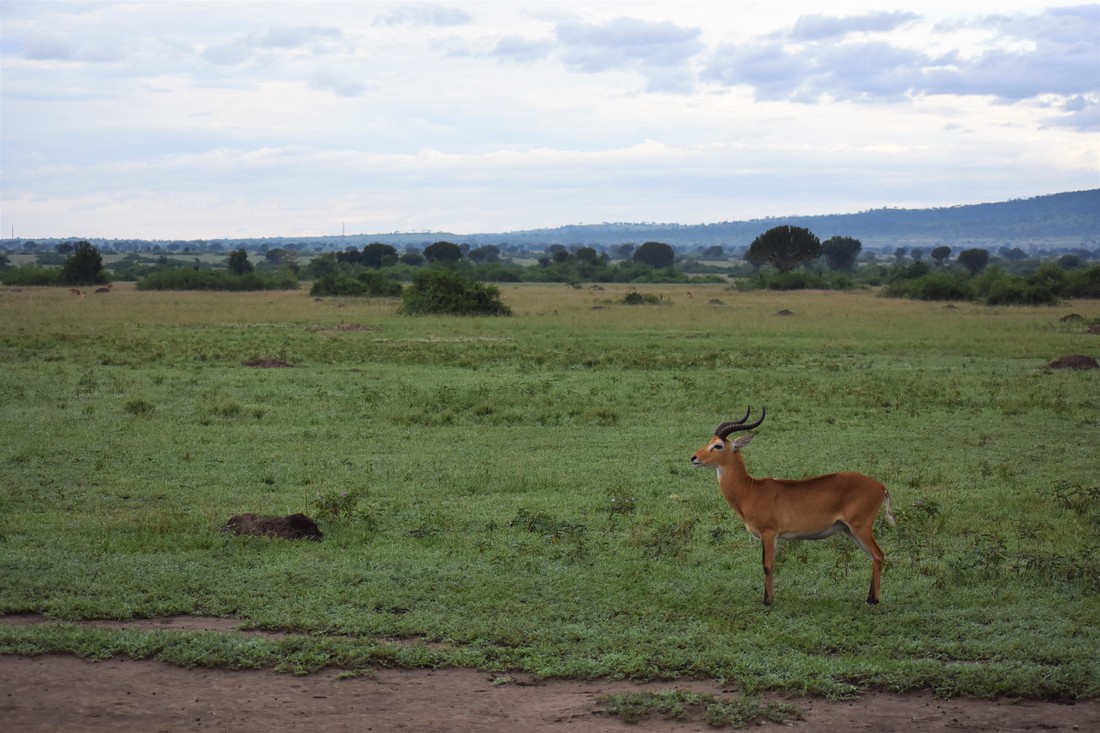
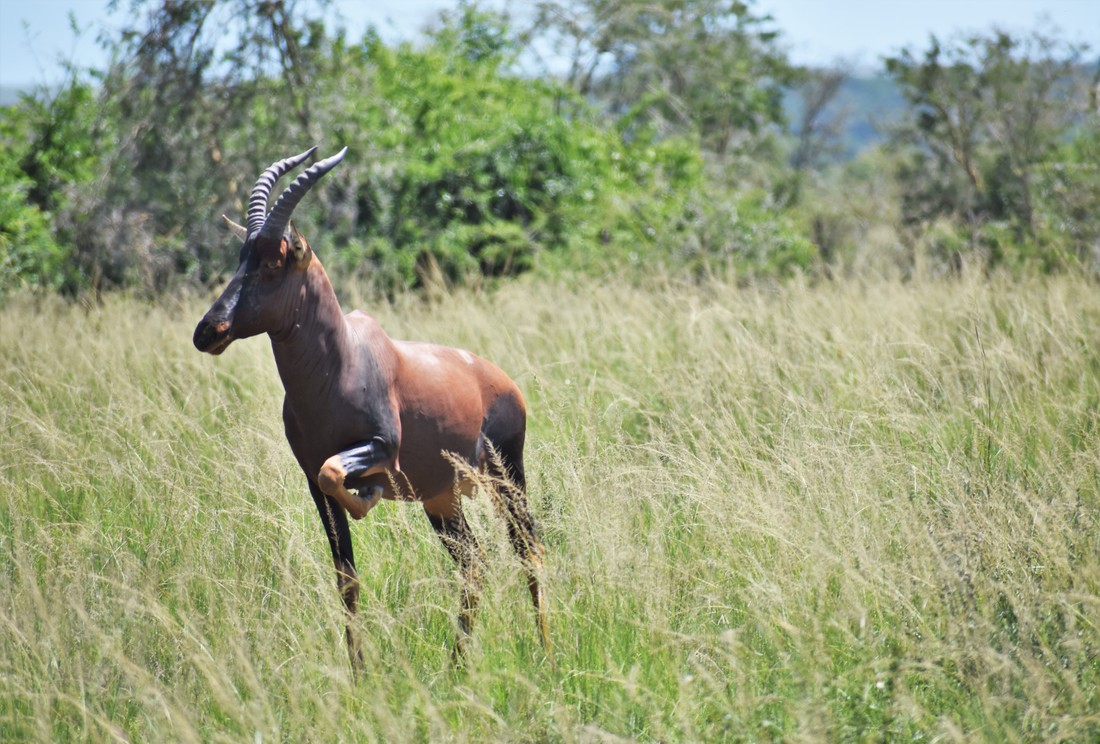
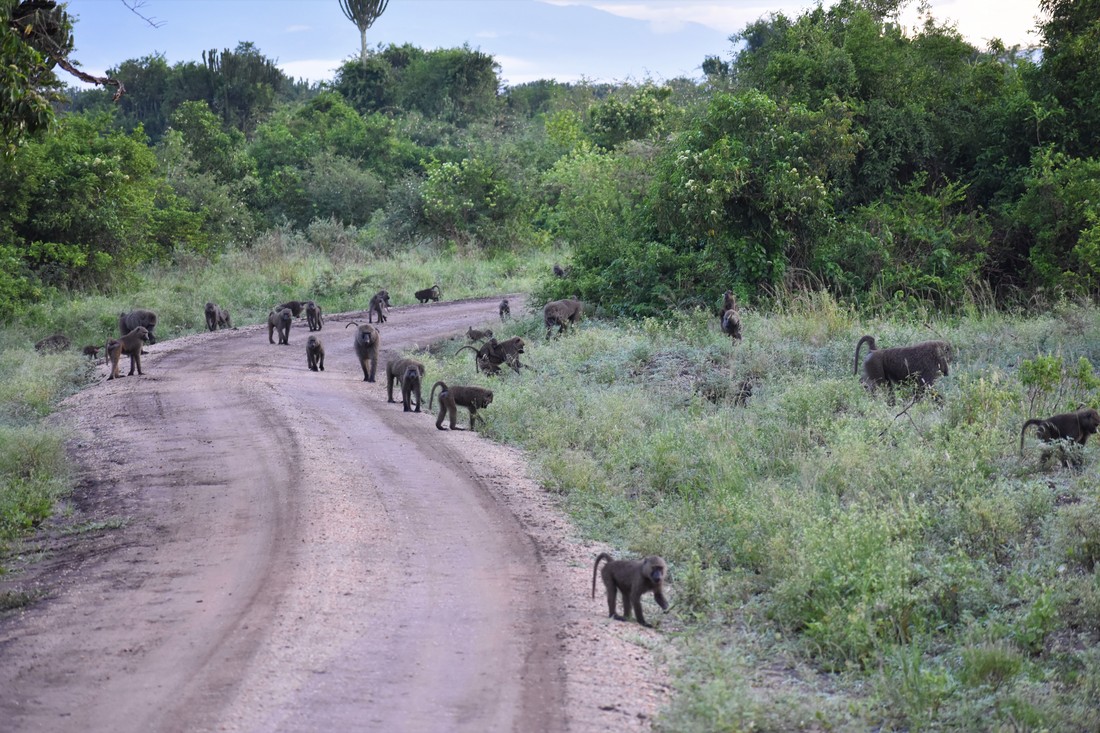 From the moment they crossed the equator, herding ungulates, or animals with hooves, dotted the landscape. Though May in Uganda is the low season for tourism, it’s the calving season for kobs, small antelope that range in the park. The babies can be very difficult to see as their mothers hide them in tall kob-colored grass, but the males with their antlers are quite easy to spot. Earthen-red topi are much bigger than kob, and apparently they have one of the most flexible and diverse social systems among the antelopes.
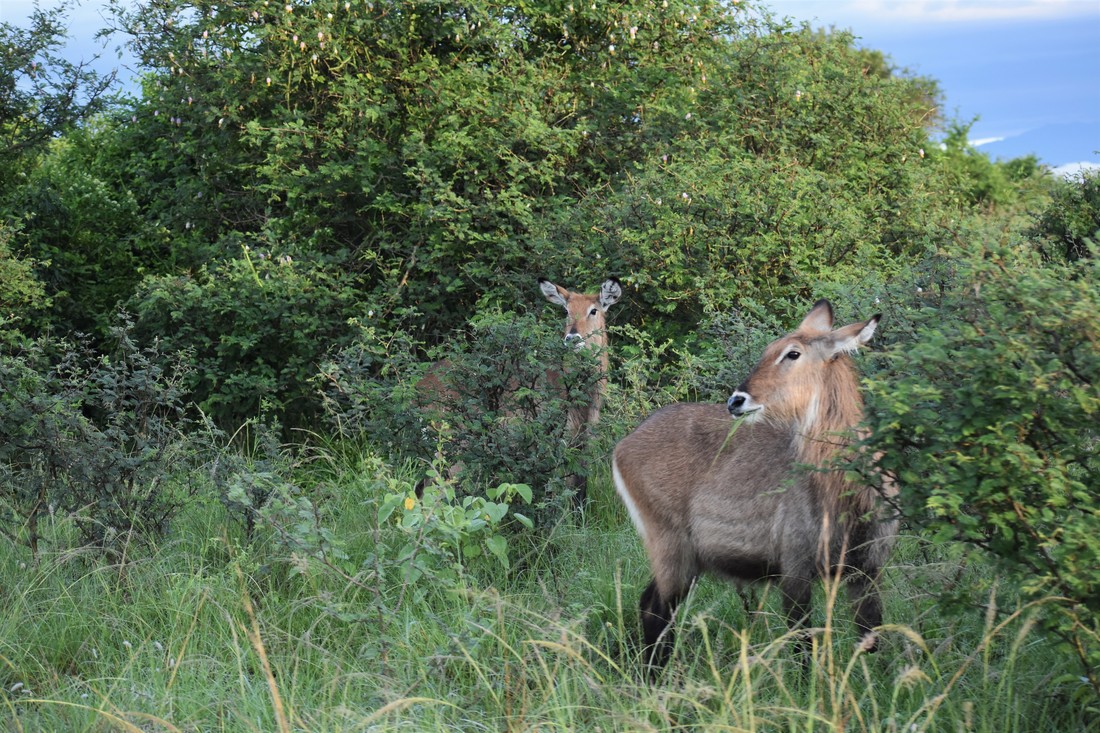 Waterbuck are even bigger still and resemble a sort of deer-donkey hybrid. According to the wildlife guides, their flesh is very unpalatable to local predators who avoid eating them in favor of smaller game.
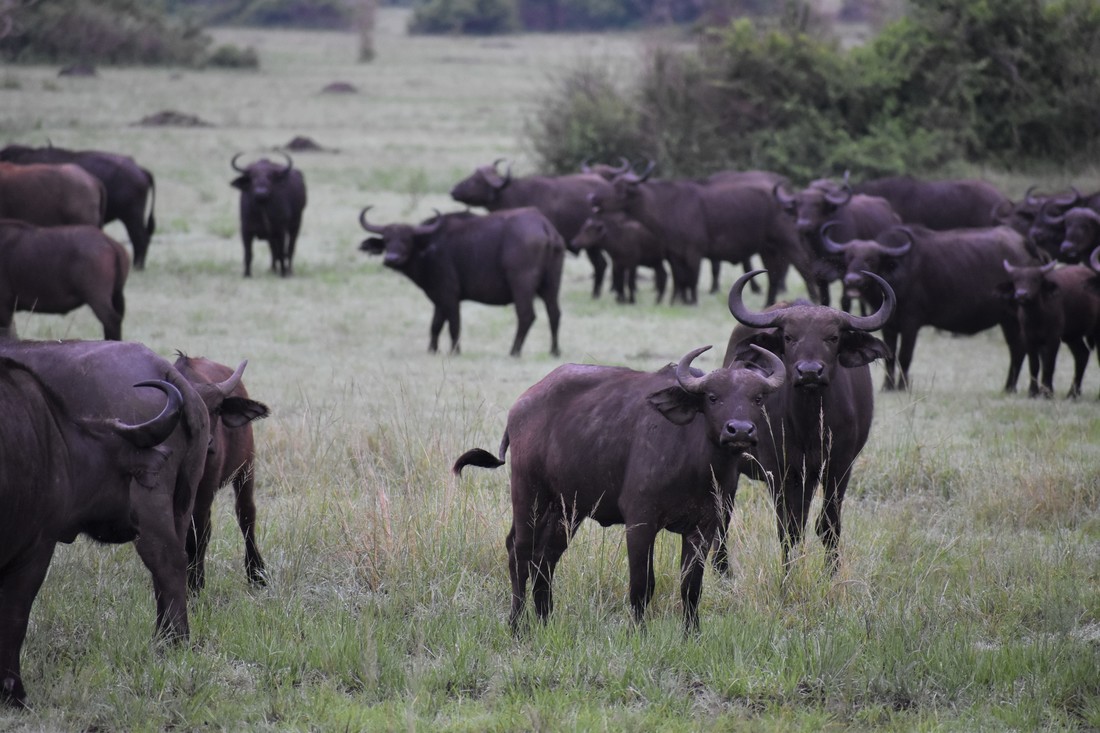
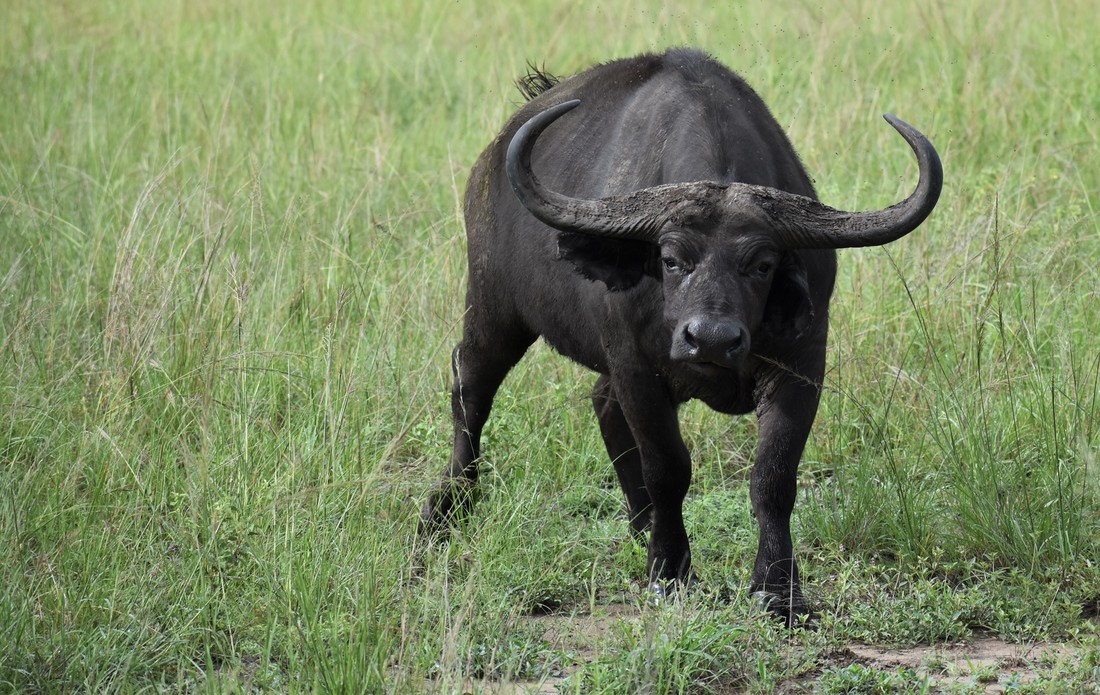
Cape buffalo were also abundant throughout the park both on the savannah and wading in the channel. Though they look a bit lazy, chewing their cud and staring into space, the brute force behind those huge horns can be quite dangerous. In fact, buffalo are among the most deadly savannah animals across Africa.  One of Queen’s most famous attractions is the UWA-led boat safari of the Kazinga channel. The channel links two of the great lakes of Africa: George and Albert. Boats launch from the Mweya peninsula and creep slowly along the shores highlighting the water-loving hippos, crocodiles and dozens of species of birds.
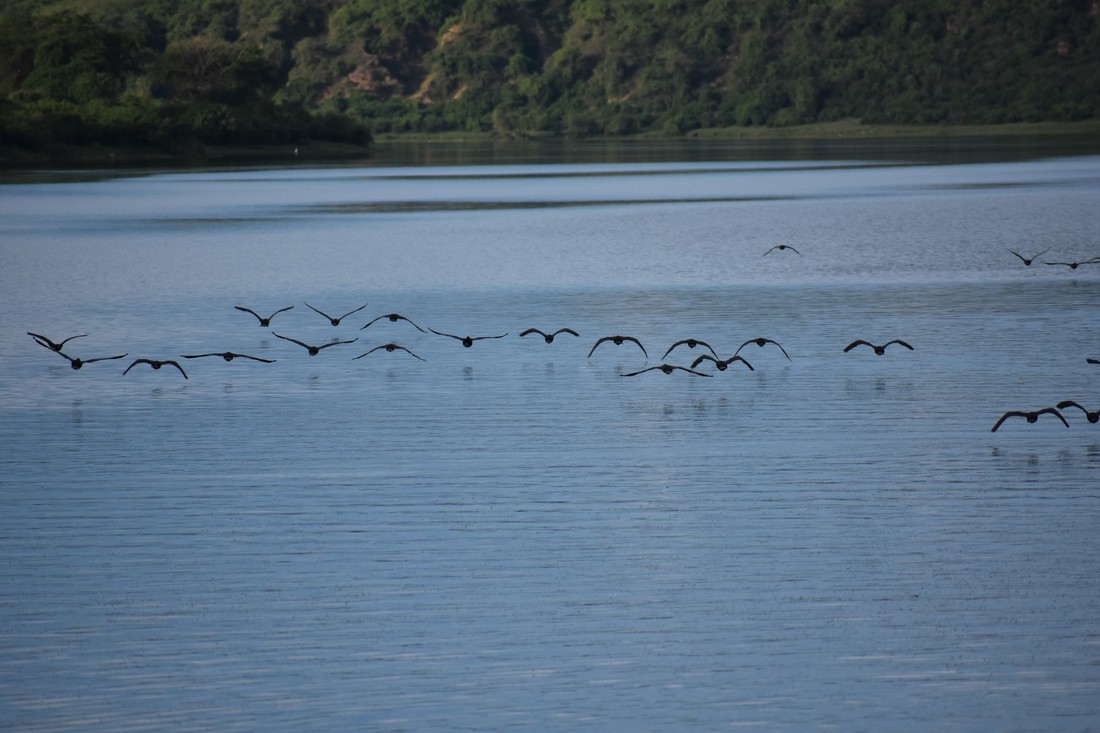
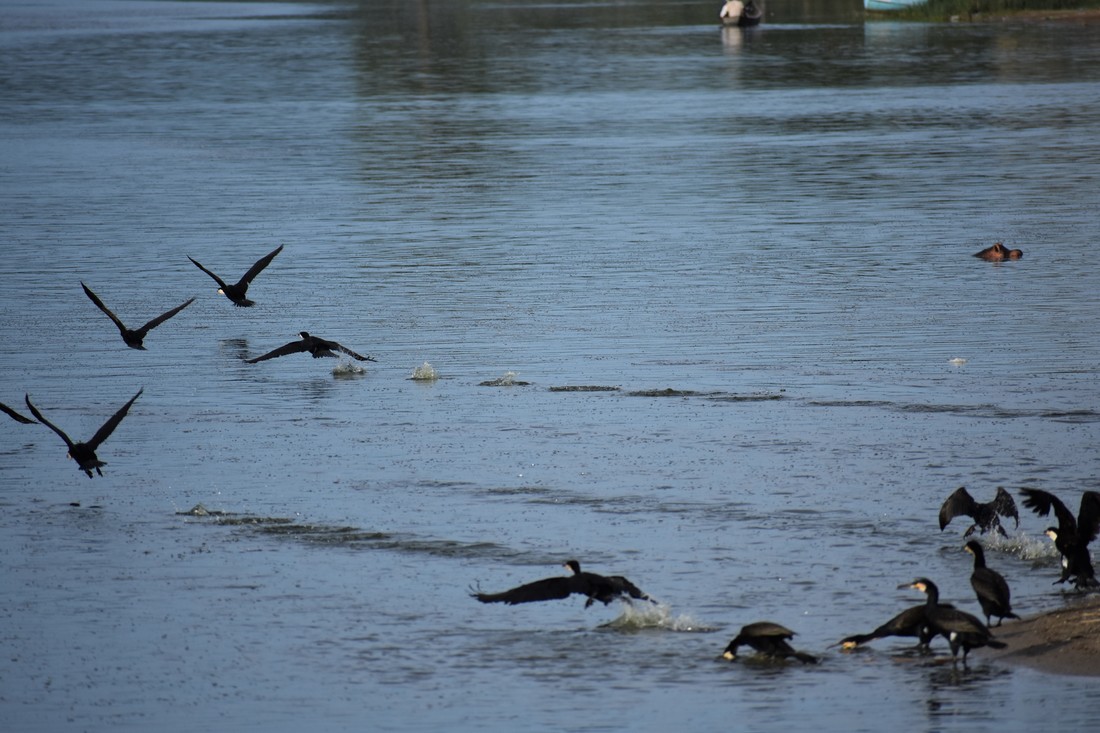
Every day, the cormorants commute from their roosting spots in the mountains down to the shores of the channel to feast on small fish. Then at sunset, the head back together, flying low over the water until finally pulling up and gaining altitude at the opposite shore.
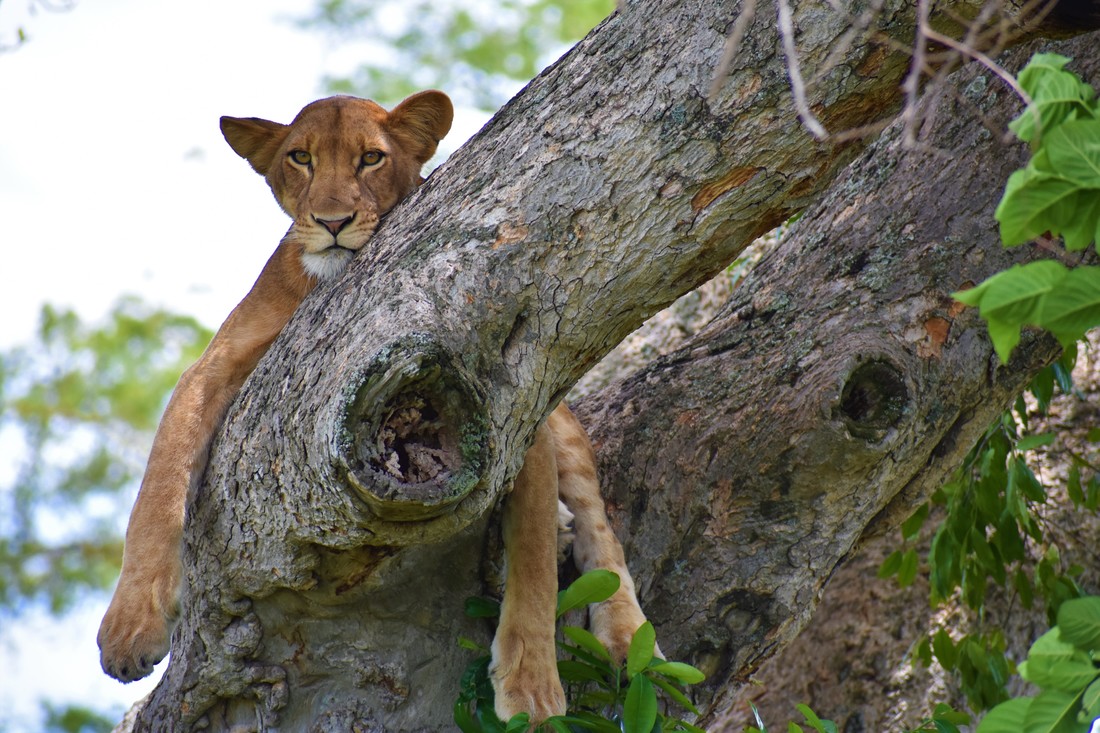
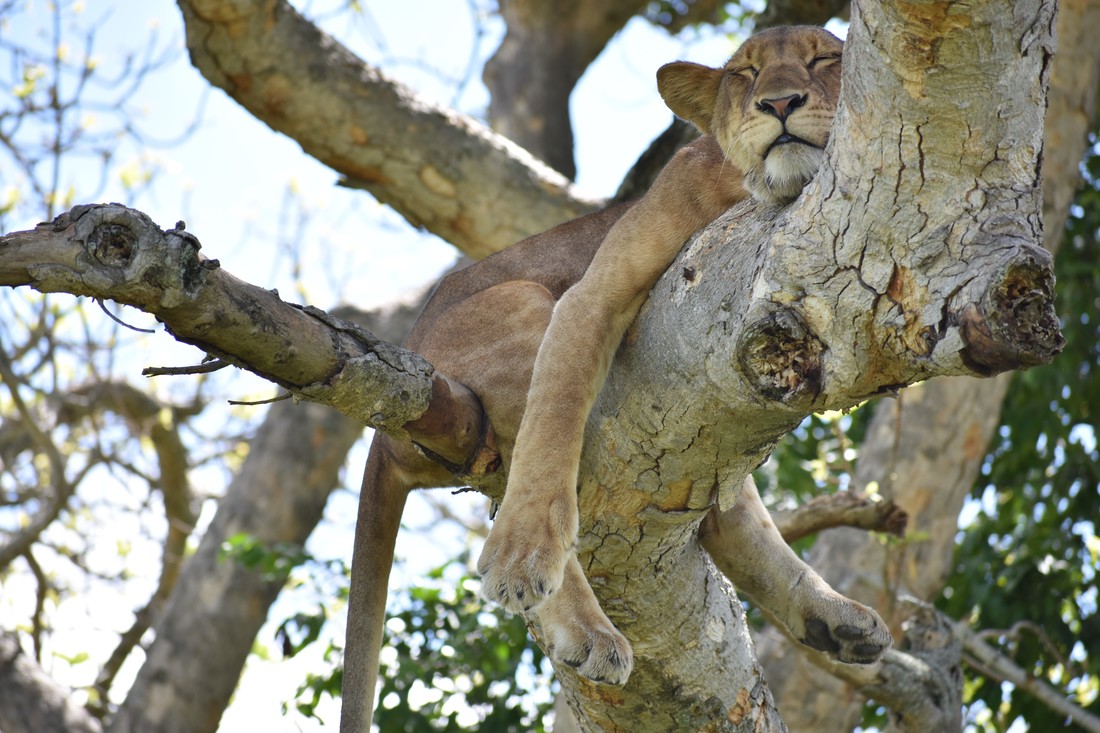
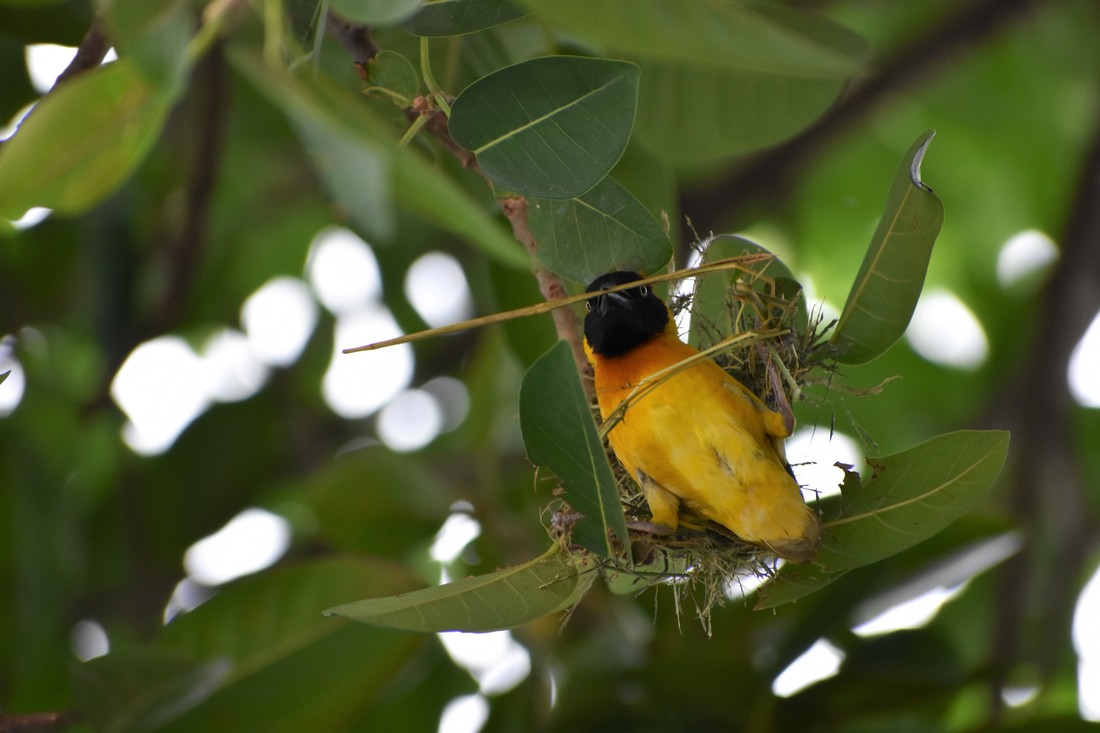
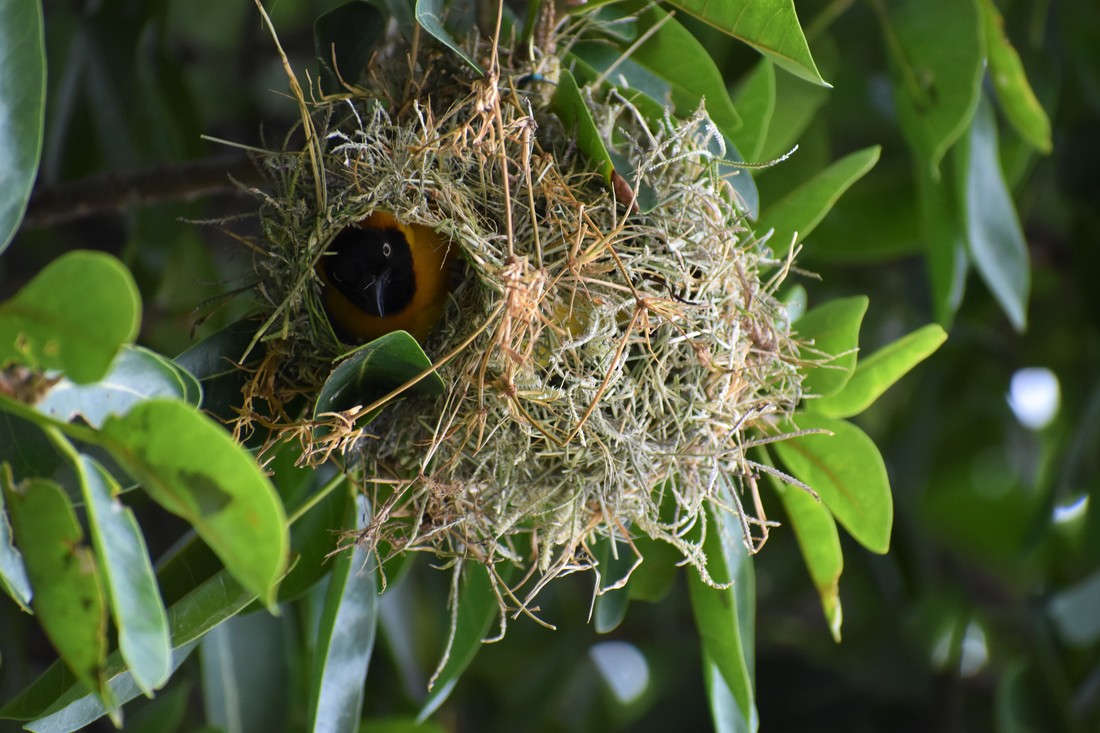
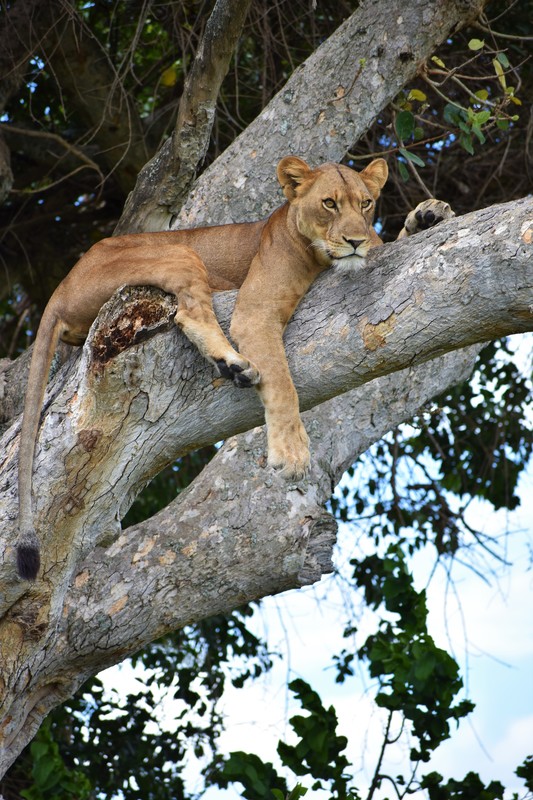
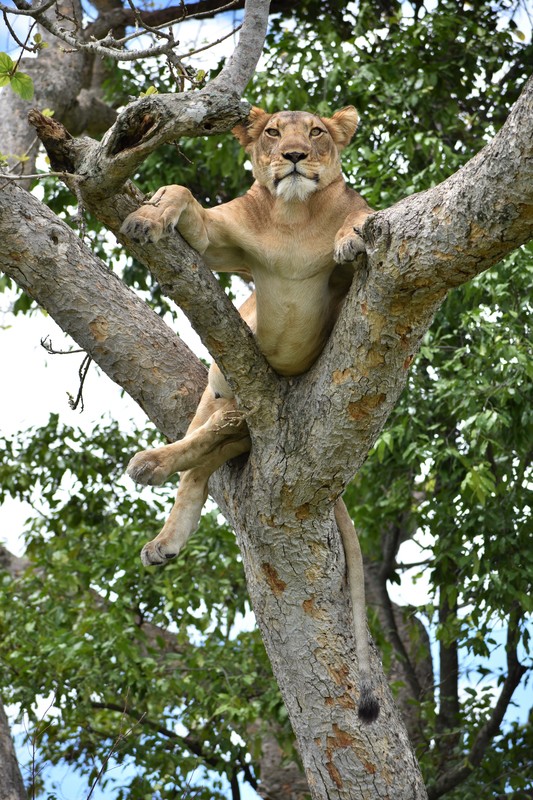
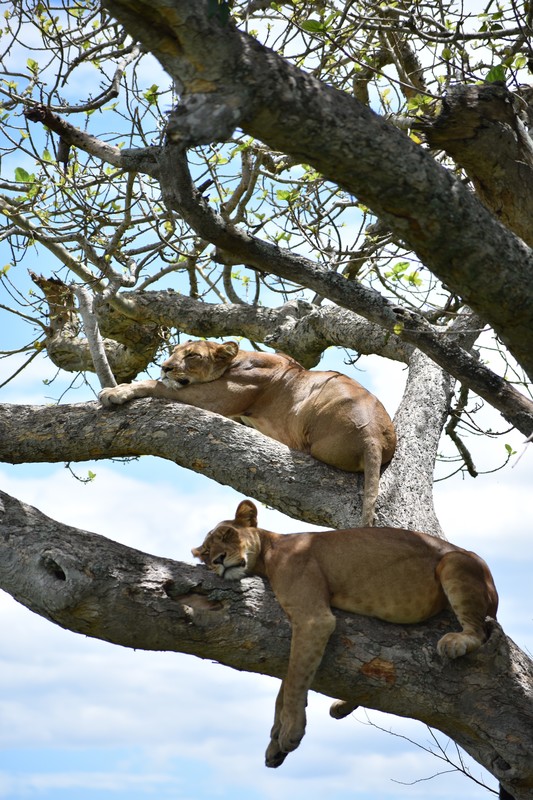
It seems that every acacia was full to the brim with weaver birds. These birds live in vast colonies of little spherical nests that they enter from below like this one. Here, a male shows off his building talent, padding his nearly-finished abode with the hopes of impressing and enticing one of his colony’s females. 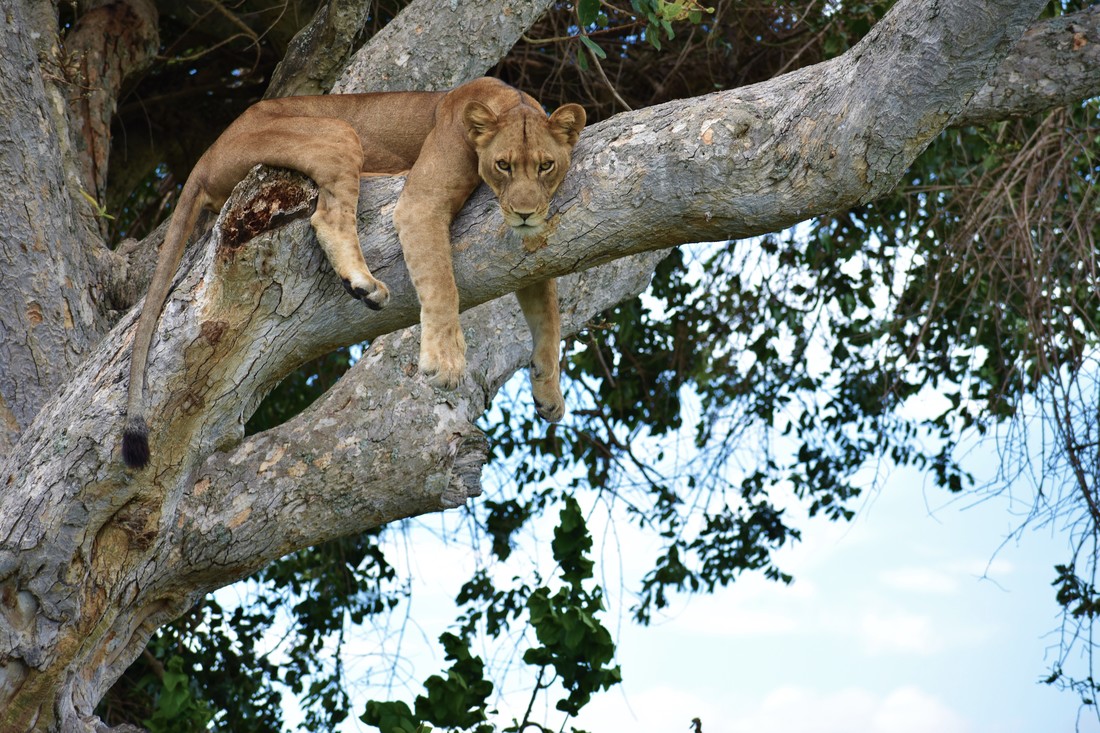 Finally, the crown jewels of the Queen’s park: the famous tree-climbing lions of Ishasha. Toward the southern tip of the park, there is a species of fig tree that grows up out of the scrub. Those trees are so big, with limbs so thick and at the right angles, that they can support the weight of full-grown lions. These lions apparently come from all over the park to rest among the branches enjoying the breezy shade above the flies and the heat of the sun-baked earth.
0 Comments
Your comment will be posted after it is approved.
Leave a Reply. |
Kris SabbiThis blog is a forum share my personal experiences as a field researcher and traveler. Categories
All
Blog Archives
June 2022
By Category
All
|



 RSS Feed
